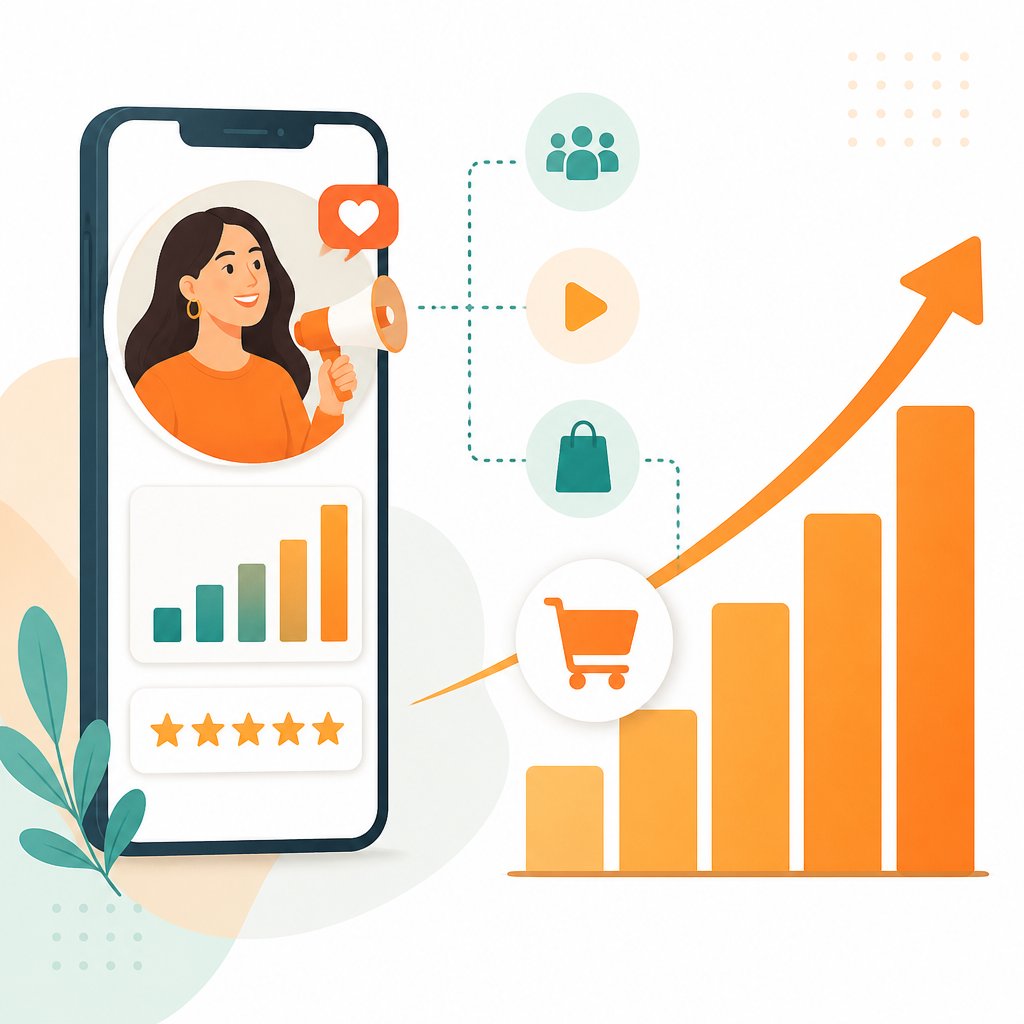
On November 7, 2026, Seoul-based Hyperstar launched an AI agent you can ask with a single sentence in ChatGPT or Claude — "find creators who will actually sell this product in this market" — and get back a list sorted not by reach, but by actual sales. The system handles selection, outreach, deal terms, campaign execution, and performance verification in a single workflow, with no manual scrolling through Instagram profiles.
It runs on real order data from eight sales channels, including Amazon, Shopify, TikTok Shop, and regional Asian platforms, plus a database of 10 million creators across 133 countries; revenue is tracked post by post, and the company holds a patent on its sales-based matching method. The example Hyperstar itself gives: an account with 235,000 followers generated 35 times more sales than an account with 797,000 followers. Hyperstar CEO Euychul Shin described the old approach this way: "we had no choice but to pick creators... on gut feeling," because follower counts never connected to revenue.
An old mistake that automation finally makes visible
The problem Hyperstar is solving is familiar to any business that has ever paid an influencer for a post: follower count tells you almost nothing about how ready an audience is to buy. A large account can have a broad but indifferent audience, people who followed out of curiosity rather than interest in a specific product category. A much smaller account can have a narrow but highly engaged audience that buys after every mention. The 35x gap in Hyperstar's example is an extreme case, but it points the same direction marketers see everywhere: reach and conversion are different metrics, and you should be paying for the second one.
Picture a small jewelry brand in Cascais with a €500 budget for influencer ads. Spending the whole amount on an account with 150,000 followers brings in three orders. The same amount put into a micro-influencer with 8,000 followers, but a narrow, highly relevant audience, brings in 40 orders — simply because that account's followers are genuinely interested in handmade jewelry rather than scrolling past it by chance.
What not to take at face value in this story
It needs saying plainly: the figures in Hyperstar's release are the company's own numbers, distributed through a paid press release, with no independent verification. The 35x example is a single case with no stated time period, product category, or sales channel; the "tenfold revenue growth" cited for a k-beauty client is likewise one example with no actual figures attached. The company has only 19 paying customers, and its own revenue was a modest $30,000 last year against a stated target of a million this year. Finally, the product is built around Asian sales channels — Coupang, Naver Shopping — that are useless for a business in Portugal; the tool itself can't simply be brought here.
But the principle it automates is universal and easy to reproduce on a far more modest scale: instead of paying an influencer for reach, give each partner their own promo code or UTM link and judge them by actual sales against that code, not likes. That doesn't require a patented AI agent — it requires a spreadsheet or dashboard set up once that tallies conversions per influencer automatically. In practice, this can look as simple as giving each creator a code like NAME10 before a campaign launches, auto-generating their tagged store link through a basic form, and letting redemptions flow into one shared sheet with no manual entry. A week later, the business owner isn't staring at scattered screenshots of Instagram Story views — they're looking at one row per influencer with a real sales figure, and next month's budget follows those numbers instead of whichever account looks more impressive. These are exactly the kind of small, always-running automations Dayava builds into small-business marketing, so decisions get made on numbers rather than gut feeling.
If you're interested in a similar solution for your business, leave a request at dayava.pt/contactos/.
Source: Thailand Business News (PR Newswire), "Hyperstar Ranks Influencers by Sales, Not Followers"