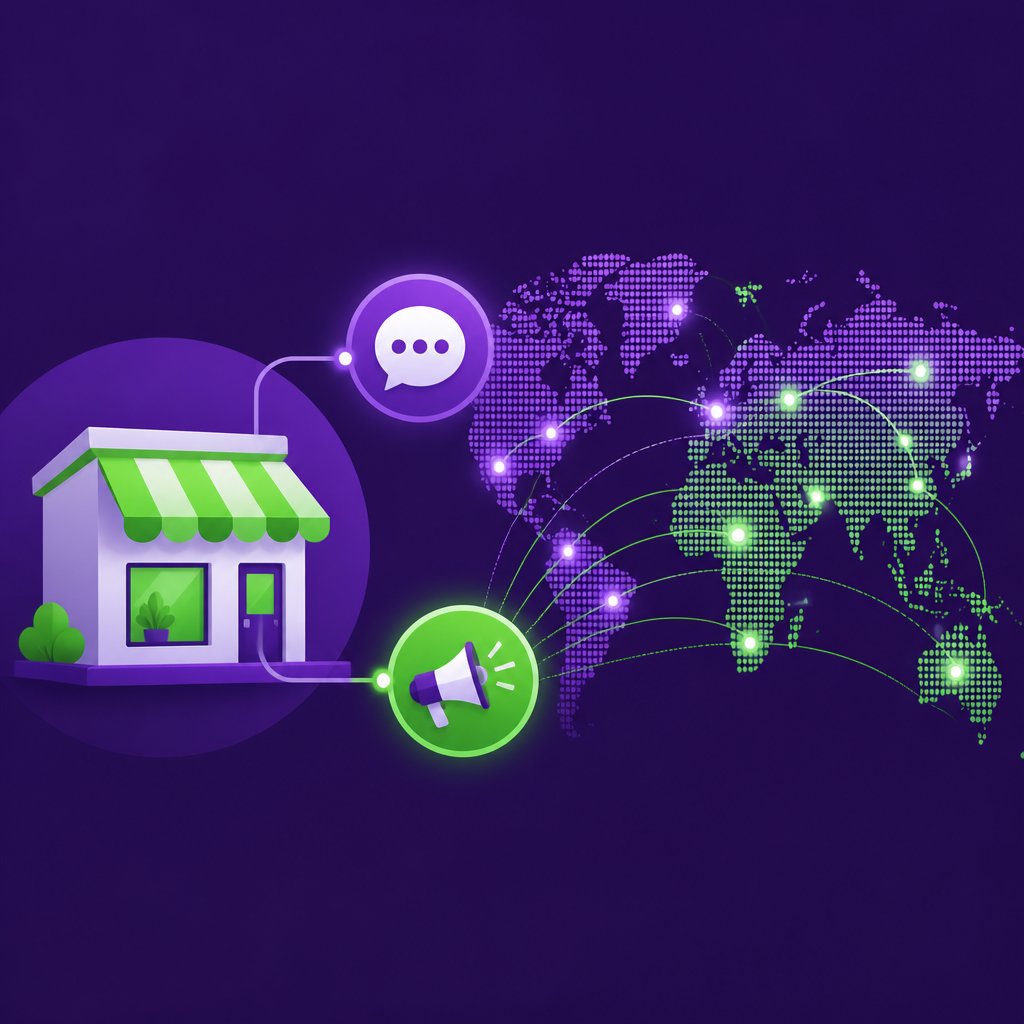
On October 21, OpenAI announced that ChatGPT advertising is now live in 89 countries — 26 of them added just days ago, including 14 Latin American countries plus Nigeria, South Africa, Serbia, Ukraine, Cambodia, Bangladesh, and Pakistan. An even more telling number: the count of advertisers who've run campaigns passed 100,000 — up from roughly 20,000 at the end of August, a fivefold jump in two months. All of this infrastructure grew from nothing in a little over eight months: per CNBC, ChatGPT's ad business hit a $1 billion annualized revenue run rate as early as August, up from $100 million in March. Ads only show to Free and Go tier users; Plus, Pro, and Enterprise subscribers don't see them.
From experiment to infrastructure in eight months — that's the real story
For a market with the history of Google Ads or Meta Ads, this pace would look impossible — there, the clock ran in years. OpenAI went from first tests to a billion-dollar-run-rate infrastructure with a hundred thousand advertisers in less time than many agencies spend getting a single annual budget approved. In parallel, OpenAI is testing a "Sponsored Agents" format with a handful of US advertisers — sponsored responses from the agent itself, not just banners next to the chat. For a small business, this means the window of "be early on a new channel while competition and prices are still low" is open right now, not at some point in the future — much like the early days of Google Ads bidding in the 2000s, or organic reach on Facebook before 2013, before the algorithm started choking off free traffic.
What's still not fully worked out in this pitch to small business
Fast growth has a flip side, and an honest conversation about the channel has to include it. First, in early October, 404 Media showed that ChatGPT's targeting system lets someone upload a specific person's phone number, email, or device identifier to show that person ads — and the reporter tested it himself, describing the process as a five-minute task available to literally "anyone," not just vetted major brands. OpenAI's response is that user conversations stay closed off from advertisers and that customer data isn't sold — but the simple fact that targeting by contact identifiers is technically possible in such an open way means a business's customer database (a list of phone numbers and emails from past buyers) becomes a valuable, and potentially exposed, asset in a new context a small business owner may not have thought about yet. Second, the channel has almost no track record: there are no years of CPM data, no mature conversion-attribution tools, no clear sense of how ChatGPT's audience responds to ads compared with search or social — simply because the channel is under a year old. Picture this: a small organic-grocery delivery company in Lisbon decides to try ChatGPT ads instead of bumping its Google Ads budget up again, setting aside, say, €300 for a test. Launching the campaign through a partner or OpenAI's Ads Manager is genuinely quick and simple — the hard part is elsewhere: there's almost nothing to compare the result against on the channels the business already knows, because conversion reporting and share-of-voice metrics here are still being built, not settled.
The practical takeaway is simple: the channel is worth testing, but with money the business is willing to write off as a "tuition fee," not by shifting its entire ad budget over. And it's worth separately reviewing where and how customer phone numbers and emails are stored — because that data now carries direct commercial value in a context that didn't exist a year ago. There's a third point that's easy to miss: ChatGPT's Free and Go users aren't necessarily the same audience that buys through search or clicks ads on Instagram. These are people who come to the chatbot with a specific question or task, not in "scrolling the feed" mode — which means an ad that feels appropriate next to an answer probably needs to look and sound different from a familiar banner. The "Sponsored Agents" format OpenAI is testing with some US advertisers points directly at this: not an image next to text, but the assistant's own answer, partly sponsored by a brand. For a small business, that means creative that works well on Meta Ads will likely need to be rewritten from scratch, not just reuploaded.
At Dayava, we help businesses test new marketing channels deliberately and use customer data safely. If you'd like help figuring out whether your business should get into ChatGPT ads now — leave a request at dayava.pt/contactos/.
Source: The Next Web, "ChatGPT ads reach 89 countries as OpenAI passes 100,000 advertisers"